 As I often do, I learned about Don’t Look Now first as a movie. Released in 1973, it stars Donald Sutherland and Julie Christie. A dark, enigmatic film, it had a hint, just a hint, of extrasensory prophecy. The bloody last scene shocked me to the senses. I remember little about the movie, but that scene I remembered. I am sure it inspired nightmares.
Years later—I am uncertain how many—I realized that it is from a short story written by Daphne du Maurier. I’ve got to read that! I exclaimed. Years later, I finally got around to reading it. The movie followed the short story so much that you might be tempted to see the film rather than read the story. But read the story first, then if you feel like it, see the movie.
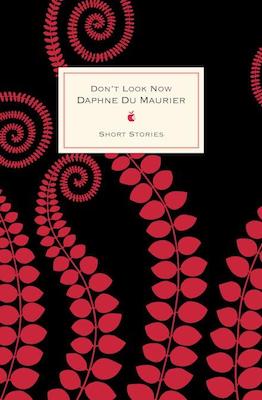
I found the story in Don’t Look Now and Other Stories by Daphne du Maurier, which I purchased for my Kindle for $6.99. Amazon also has it available as a hardcover for $23.81, paperback for $17.22, and the audiobook for 99¢.
Following the death of their young daughter, John and Laura Baxter restarted their marriage by vacationing in Venice. While there, they met twins from Scotland. One of the ladies was blind, but the other was not. The blind one, she claimed, is a clairvoyant, and the other one told Laura that the little girl sits between John and her. Laura was ecstatic. But John was suspicious. He believed, among other things, that the twins were men masquerading as women. They were con artists! Or something worst! When Laura, last seen with the twins, ended up missing, he believed his suspicion was justified.
That was not exactly what happened, but it is what John believed had happened. The story is told in the third person from John’s perspective. We know only what he knows. He knows Laura’s thoughts and feelings only based on what she tells him they are. Ditto with other characters. Given the macabre ending scene, it was an effective choice du Maurier made.
The experts are right, he thought, Venice is sinking. The whole city is slowly dying. One day the tourists will travel here by boat to peer down into the waters, and they will see pillars and columns and marble far, far beneath them, slime and mud uncovering for brief moments a lost underworld of stone. Their heels made a ringing sound on the pavement and the rain splashed from the gutterings above. A fine ending to an evening that had started with brave hope, with innocence.
Grief is the theme, as both main characters, John and Laura, feel it, but for them, their grief manifests differently. John is practical. Their daughter Christine’s death happened, and there was nothing to be done but to return to the life they were building for themselves. It feels cold, heartless, but it is believable and, John thinks, doable. Laura feels the death of her daughter in her soul. She clings to her memory of Christine, and she dreads the same fate for John and Johnny, their son. Since Johnny is at boarding school in England, he is not with them in Venice, but he becomes important when the headmaster contacted them to tell them Johnny is sick. Worrying about him, Laura rushed home, catching a flight, while John planned to join them the next day. There was a car rental that needed to be returned!
My word of the story is hermaphrodite, having both male and female reproductive organs, and du Maurier uses in the opening scene where John and Laura were making up stories about the twins. It’s a game they play. When one of the twins went to the woman’s room, Laura decided to follow. John said, “If she’s hermaphrodite, make a bolt for it.” Perhaps he jested, but later in the story, he expressed a fear that twins are really men disguised as women. This foreshadows the belief.
Born in 1907, Daphne du Maurier was a private person. In 1932, she married Frederick “Boy” Browning, but his military career forced long absences. She also had a relationship with Gertrude Lawrence, an actress, that may or may not have been romantic. She began writing in her twenties. Noteworthy other works include the short story “The Birds” and the novel Rebecca. In 1969, she was named Dame Commander of the Order of the British Empire. She died on April 19, 1989.
“Don’t Look Back” is a gloomy story. No happiness to be found in its pages. But I like that about the story. Feel-good stories are not my cup of tea. In the pages, you find the emotional Laura and the practical John and their need to make sense of the death of Christine.